In search of a better chai
Primer
Chai is a lovely way to drink black tea. Chai / cha just means tea in a tonne of languages but this post refers to the methods used on the Indian subcontinent and other variants around the world which have these methods as their base. Specifically, this recipe refers to a chai I grew up sipping in Kenya. Although I lived in inland, high altitude Kenya, I’m told my method of preparation more closely resembles tea as prepared on the coastal plains. It is perhaps most similar to (rather unsurprisingly) adani chai as prepared on the Arabian peninsula and parts of Gujarat, Rajasthan and Maharashtra. Can we call it an Arabian Sea chai?
Essence
This type of chai is “spicier” than the traditional English one but more frugal than other Indian styles. The focus here is much more on the black tea leaves and so these should not be overpowered. Sugar is traditional and while I’ve tried alternatives and they are fine, they are not the same taste. Milk is whole and used sparingly. I’m convinced that milk alternatives should work since we’re just relying on the fat and protein components but I am yet to try these out. The only accent note used here is cardamom, Specifically try to find whole, green cardamom pods – they are a slightly pricey spice in most places – but we will use them sparingly too. Also, this is a heavy drink. Think of it less as tea and more of a “strong, sweet, tea soup”.
Recipe
I’ve been frustrated too many times by easy looking youtube recipes that just don’t mention proportions. Even if you eventually get to a stage where you can eyeball it consistently, how are you sure that you’re getting closer to the way it’s supposed to taste? So we’ll use sensible percentages. That way you can scale up and down accordingly and never worry about the taste / consistency. Ideally, use a cooking friendly weighing scale the way you would for precision coffee. But I’ve tried using volumes instead and for this one, I’ll say that having a bit of inaccuracy from volume (things like tbsp and cup) still get you a very good result without time wasted weighing items out. So for this one, quick volumetric calculations win.
Items needed:
- Tap water
- If preparing for 1 person, use a full cup of whatever vessel you’ll be drinking from - full because of loss due to evaporation.
- If preparing for more than 1 person, use 2/3 of the drinking vessel x the number of people drinking.
- Not a problem if you live in an area with non-potable water. This will be boiled and strained. Use your local water and its unique flavour profile.
- Black tea leaves
- 1 teaspoonish per cup.
- Curled CTC type tea is best, loose leaf may require longer steeping.
- Preferably bold, malty variants such as Assam or Kenyan varietals.
- In the anglosphere, most English breakfast style deals will do. Irish breakfast would be even better.
- Where unavailable, look for “bold” or “strong” variants e.g. Tetley Bold. These often have Assam in them.
- If in Russia or the CIS, most black tea will do. They seem to like it strong!
- Ceylon will do in a pinch. Darjeeling is far too subtle. This process will violate it.
- Sugar (any kind)
- To taste, but 1 teaspoon per person ought to do.
- I have tested this with maple syrup and it was acceptable. Honey works too but stevia is a disaster because of it’s contrasting taste.
- Whole milk
- 1/3 of your drinking vessel, regardless of how many people are drinking - milk fat will not be lost like excess water.
- I have to try non-dairy alternatives but stick to higher fat / protein content and you should be fine.
- Green cardamom pods
- 1 pod per cup. Bruise it up or split it slightly to get more out of it. I have reused these up to 1 more time and it was fine.
- Tea strainer / wire mesh sieve
- Ensure the mess is fine enough to filter out tea and cream that sometimes forms at high temperatures.
Process
-
Pour the tap water into a saucepan / pot that is at least twice as large as the water you put in it. If it’s cutting it close, no worries, just pay careful attention when it reaches boiling point. Place this on medium heat.
-
While it’s heating, put in the sugar, tea and cardamom. The tea will initially be at the bottom but start to get flung around gradually as the water reaches boiling point. Just get mesmerised by dancing tea leaves; it’s delightful!
-
As soon as it begins to boil over and the movement of the cardamom pods and tea becomes ‘jerky’, pour in the milk slowly. You’ll hear the boiling hiss quieten as the hot liquid gets quenched.
-
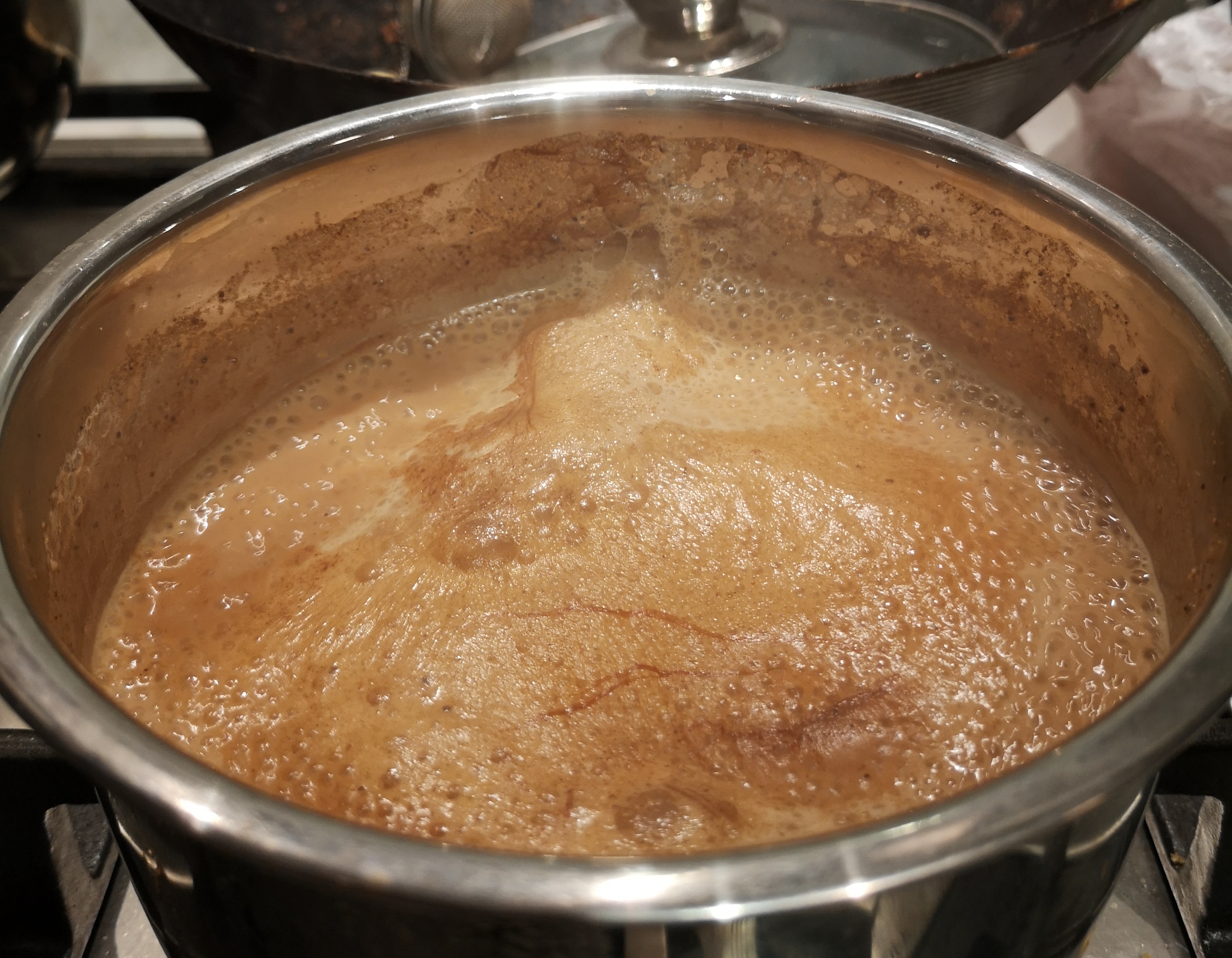
At this point, you cannot step away from the pot - especially if your pot wasn’t twice the volume of the liquid in it. The liquid will once again come up to a boil, but because of the milk fat, it will hiss and foam up rather quickly. Just before it reaches the rim, quickly lower the heat to simmer or lift the pot of the heat source. Removing the heat source will quickly lower the foaming soup. Just be careful! It’s a pain to clean up overflowing chai.
-
Once you lower it to simmer, you’ll notice a lovely dark brown broth. Highly opaque with tea dots dancing around. Keep smelling this mixture at various stages by the way. Don’t do anything, just smell it constantly every time you prepare it. After a few times, your nose will begin to guide you automatically - the human sensory system is remarkable. I digress though. At this point, you can safely walk away and tend to other things if needbe. The time taken for all this depends on your altitude and pot size, but estimate it to being about 10 minutes.
-
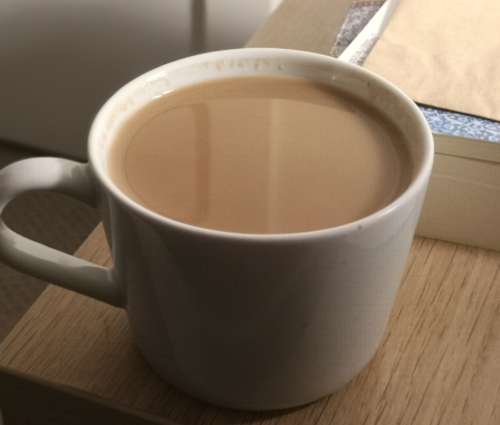
After about 4-5 minutes, have a look at it. The mixture should be gently simmering and a thin film of cream may have formed at the surface. Don’t worry about it, it will be strained out and does not affect the taste just yet. At this point, the chai is ready. Turn off the heat and strain it carefully into your cups. If there’s any leftover, bonus. The fastest drinker will get a top up at some stage.
-
The tea leaves can be thrown into compost or down the sink. The spent cardamom can be drained and left aside for a while and reused the next day. But no more than that.
Enjoy.
Addendum
2020-07-24
Big shoutout to a reader in St John’s, Newfoundland for trying out the above with oat milk and confirming it works just fine, albeit without the foaming when boiled. I tried it out for myself and it was a fine cuppa. You do need a ratio adjustment because oat milk has less protein and fat than dairy milk: use slightly less than a teaspoon of tea and slightly more than a third of a cup of milk to get a balance. I’m also not sure how oat milk changes when boiled so I wouldn’t push it to rapidly boil for too long. Instead, pour the oat milk in and let it get up to temperature and then lower the heat to simmer for longer before straining. Now I just need some more brave souls to try out other milks :)